Continuing to sing

26 01 2012

I have not written much in a while. We of course continue to think about Anna each day. Sometimes just to tell a story. Sometimes to laugh about something funny she did. Sometimes to cry together. One of my personal times to think about Anna continues to be during worship at church or in chapel at school. I continue to sing certain songs about Anna and to ponder  the truth of the gospel as it continues to apply to one who is nearer the resurrection than I.

Here is the lyric for Abide With Me changed to reflect God’s truth as manifested in Anna’s life. The changes spoil the rhyme, but it is still beautiful.

Abide with Anna; fast falls the eventide;
The darkness deepens; Lord with her abide.
When other helpers fail and comforts flee,
Help of the helpless, O abide with her.

Swift to its close ebbs out life’s little day;
Earth’s joys grow dim; its glories pass away;
Change and decay in all around she sees;
O Thou who changest not, abide with her.

Not a brief glance she begs, a passing word;
But as Thou dwell’st with Thy disciples, Lord,
Familiar, condescending, patient, free.
Come not to sojourn, but abide with her.

Come not in terrors, as the King of kings,
But kind and good, with healing in Thy wings,
Tears for all woes, a heart for every plea—
Come, Friend of sinners, and thus bide with her.

Thou on her head in early youth didst smile;
And, though rebellious and perverse meanwhile,
Thou hast not left her, oft as she left Thee,
On to the close, O Lord, abide with her.

She needs Thy presence every passing hour.
What but Thy grace can foil the tempter’s power?
Who, like Thyself, her guide and stay can be?
Through cloud and sunshine, Lord, abide with her.

She fears no foe, with Thee at hand to bless;
Ills have no weight, and tears no bitterness.
Where is death’s sting? Where, grave, thy victory?
She triumphs still, if Thou abide with her.

Hold Thou Thy cross before her closing eyes;
Shine through the gloom and point her to the skies.
Heaven’s morning breaks, and earth’s vain shadows flee;
In life, in death, O Lord, abide with her.


The Soul and the Body

27 09 2011

One of the things you will read if you read about grieving the dead is that it is common for people to forget the physical characteristics of the person who has died. They are able to remember other aspects of the person, but they are unable to recall the voice or the face, for example.

I can’t say what others’ experience is, but I have not found this to be the case.

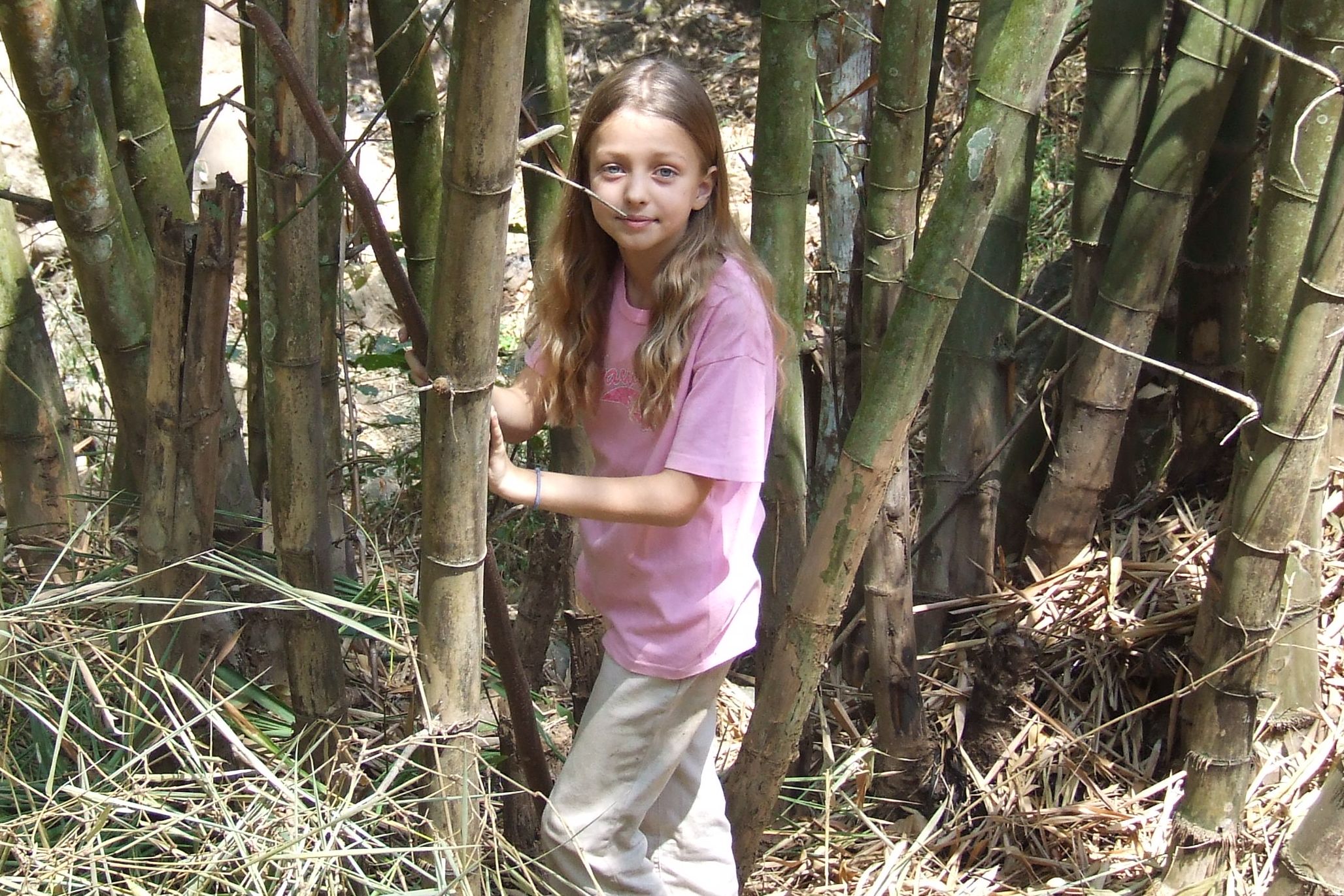
On Sunday we entered the sanctuary for worship. We found a friend from our Sunday School class and we made our way into her row. As we prepared to enter, I looked down the row of seats and noticed that a family was there with a young girl sitting next to where we would be. I knew right away this would be trouble. I did not want Timberley sitting next to her through the entire service, so I quickly stepped in front and said that I would go in first. I knew it would be trouble because it was obvious that this girl bore a striking resemblance to Anna. She was about nine years old with long, straight, blonde hair.

As I sat down I began transferring my thoughts of Anna to this little girl. I wanted to squeeze her hand. I wanted to ask her her name, wondering if might be Hannah, or Grace (Anna is the Greek form of the Hebrew name Hannah. Hannah means “grace”.) I wondered if she liked to read good books. But I also knew that anything I did like that would frighten the child and land me in trouble with the parents, so I kept my hands and my words to myself.

But then something interesting happened. I realized that this girl was not really nine. She was probably eight years old, maybe. And when I looked down at her hand, I saw her fingers, and they were not Anna’s slender fingers, with the little curve they would have when she relaxed. I noticed then, as I looked at her fingers, that they rested on a bare knee. Anna would never have her knees showing like that, I remembered. This skirt the girl is wearing is far too short to be Anna’s. Anna’s sense of modesty was so strong that when she went to school in Kentucky one semester, she wanted to wear the school skirt everyday to school because it covered her knees. She couldn’t bring herself to wear the shorts.  Then, out of the corner of my eye, I saw the clincher. This girl had pierced her ears. As glamorous as Anna was (and she was striking), I could not conceive of Anna reaching an age wear she would pierce her ears. She had this sense of her body that it was not to be violated, either by her exposing it, or by damaging it, or changing it in some way.

And so, the longer I sat there, the more I became aware that despite an initial superficial resemblance, this was not Anna. Anna was unique. As is each person. One of the great glories of God is that he has created billions of people, each one bearing his image. And yet each one unique. Each one with their own smile, with their own turn of the nose, or droop of the ear. Each one with their own way of holding the hand, or sitting in a chair.

I have heard it said that the fact that we remember more the inner character of the person rather than the physical appearance indicates that the real person, the soul of the person, is what is inside. The physical body is simply a shell containing that person. In my experience with Anna, at least, that is not the case. And I don’t think it is biblical, either, since the Bible is clear that it is not merely Anna’s spirit, or inner being, that will live with Christ, but that her physical body will be raised and she will have a new body at the resurrection. Heaven is a physical place where we will see, hear, feel, and have bodies. And Anna is hoping and waiting for that day just as we are here. Maranatha.


Long Time, No Read

22 09 2011

It has been some time since I last posted here. It seems that good intentions, as they say, . . .

We are continuing to work away here. Timberley is continuing to educate Samuel at home. He is in the ninth grade. She is supplementing what she does with many outside programs, so she is more like the principal now, having many teachers working with her to educate our son. They are both doing well. Sam is playing football again this fall in the Homeschool Football League. He is playing at the JV level again. He moved over from right guard to right tackle since he grew about four or five inches over the past year. The other change for him is that since the Wake Forest JV team got so big, they split into two teams. Because of that he has to start on offense and defense, playing defensive tackle when they don’t have the ball. If you are in Raleigh on a Saturday and want to see some good football, come to Fred Fletcher Field. The Mighty Mite games (7-10 year olds) start first, around 10 AM. The youth league plays next (10-13 year olds) and then the JV games (13-15 year olds). His game are usually around 1 PM. The varsity games are after that.

Sam is still in scouts, too. He is the patrol leader of the Cobras and is enjoying his new responsibility. This Friday night the boys in his patrol are coming to our house and camping in the backyard. Should be fun. He is a star scout and working hard towards his eagle scout rank.

We love our church, Richland Creek Community Church. Timberley and I serve in our small group there. I teach the class, and she makes sure that everything else runs well. We have a great group of friends there. It is a good place to be part of the body of Christ.

This past summer did not go quite as we had planned. Several events in Timberley’s family shook things up a little and took us up to Richmond more often than we expected, and in some cases, than we would have wanted. On the good side, her niece, Brandy Walton, got married. They asked me to do the service for them and I agreed. They had a beautiful wedding on a mountainside in the Wintergreen resort area of the Virginia mountains. Not sure a more beautiful place could have been found.

On the other hand, Timberley was called up to Richmond several times to help care for her sister, Melanie, while she was in the hospital with complications from her bout with cancer. She was finally released to hospice care and Timberley stayed there with her full time until she passed in July. It was a traumatic time for everyone involved, though certainly not unforeseen, since she had been battling this cancer for years.

One of the joys that Timberley is having now is watching the races of Melanie’s son, Ryan Peterson. He is an outstanding young runner, both as part of a champion high school cross country team, but more so individually as he competes in duathlons (biking and running) and triathlons (swimming, biking, and running). He is doing very well and should go far in this sport. I think with Melanie’s passing, it means a lot to him that his Aunt Timberley is coming to his races to cheer him on.

We continue to miss Anna. The events of this summer only served to be another reminder of our loss. And yet it was one more reminder of the hope we have in Christ. It is amazing to me how many of the songs we sing at church speak of a reality that we can only see through a glass darkly, but which Anna now sees clearly. We sing and we grieve. Things happen here and I still find myself wishing that Anna were here to enjoy them with us. And yet she is enjoying so much more. I almost said “so much than I will ever know.” But that is not true. Someday I will know it, too.


May 7, part 2

9 05 2011

[continued from May 7, part 1]

The next phone call I received changed my life forever. It placed a wedge between what had come before and what would follow. I don’t believe that wedge will ever be removed.

A pastor we knew from our church in California, Karl Ortis, had been visiting us. He had come to Indonesia to see how his church might be able to partner with us in our ministry there. We had just finished a very fruitful and hopeful trip. We had gotten up early in the morning on May 7 and we rode together into Semarang where I was teaching at the seminary. Karl came with me to my Greek class. We went to chapel, and then I took him to lunch before his flight back to Jakarta and then home to San Francisco. Our lunch that day was frog legs. He was so excited because he had not had frog legs since his days growing up in Louisiana.

After I dropped him off at the airport, I went back to my car and started out of the parking lot. While I was just leaving the airport, Timberley’s first call came, telling me that Anna was lost and they were searching for her. After I talked for a minute with her, I texted a few friends in Salatiga and asked if they would go over and check on Timberley. Then I went to the gas station to fill up before heading home. When I left the gas station and started back toward Salatiga, I crossed a bridge on the road right in the middle of town. I remember the phone ringing the second time while I was in the middle of the bridge. Timberley was screaming on the other end “My baby . . . My baby is dead . . . She’s dead . . .” And she was sobbing on and on. Then I was disconnected. Silence. Nothing.

What in the world is happening? What is going on? I immediately started calling back on her phone. No answer at first. Then, finally, a male voice, “Is this Todd? Hi, Todd, this is Mike. Where are you? Semarang? You need to get home quick. Get home now. . . . It looks like there’s been an accident . . . I don’t know what has happened yet . . . I don’t know for sure but I think Anna is dead . . . We just don’t know yet, but it doesn’t look good. . . . But you need to get home now.” All the while I was listening to my friend, Mike, I could hear Timberley screaming in the background.

I needed to talk to someone. I needed help to know what to do. Uncle Paul. Paul Sheriff and his wife Lucy were about the best friends we or anyone ever had. He was  the older man and woman we needed while we on the field. They were the grandparents that our kids were missing while we were in another country. I needed Paul to tell me what to do next.

He told me to stop at his house on my way through town. He would drive me on the hour-long trip to Salatiga. When he joined me at that moment, Paul did not leave my side until we boarded a plane in Semarang about three days later that would take us home to America for Anna’s memorial services. He was a rock for us at the most crucial time we have ever had.

[to be continued]


May 7, part 1

7 05 2011

[Continued from Can I Tell Anna’s Story?]

And so, I’m not sure if I can tell you all about May 7. I suppose that my student who wanted to know what happened to Anna wanted to hear something like, “Anna was sick and . . . .” or “Anna was born with this disorder. . . “, or something of that sort. So I guess the short answer to the question What happened? is that there was a bicycle accident. She fell off her bike. “What?” the Indian man working in the airport in Kuala Lumpur said incredulously, as he wanted to know why there were only three people traveling on a ticket purchased for four. “People don’t die from falling off bicycles.” Well you see, there was this river, and a bridge. But she didn’t see the bridge, or she lost control of her bike, or, well, we just know what happened exactly, but she missed the bridge and fell into a ravine. About thirty feet down. There was rock at the bottom next to the small creek that ran behind our house. According to the doctors, her head hit something and the back of her head was crushed. She died immediately. She was in the water when she was found, but there was no water in her lungs, so she was already dead by the time she entered the creek.

Earlier in the day, Timberley, Samuel, and Anna had ridden their bicycles over to the international school where Sam had some activities. Timberley and Anna rode back home, and then, after reaching the house, decided to continue on their ride. Anna was supposed to go riding later that afternoon with a friend and Timberley wanted to make sure that she knew the trails and how to get back home. They rode on through the last houses in our village, and then turned to the left go toward the rice fields. As the last of the houses gave way to the beautiful vista of the rice fields that descend down to the small river behind our house, the road they were on became a single bicyle-width paved trail that wound slowly through the field. The trail bends around to the left in a slow curve and then sharply to the right as you approach the river.

Timberley always rode her bicycle behind the children when they rode their bikes. She wanted to make sure she could see everything that was happening in front of her. She was riding this way on May 7. But just as they entered the path through the rice field, a motorcycle rider came up behind Timberley, passed her, and then slowly went down the hill, preventing Timberley from keeping up with Anna who, unheeded, sped on down the hill. Anna went on out of sight, and Timberley continued slowly, annoyed at this motorcycle rider that made her slow down.

When Timberley reached the bottom of the path and approached the bridge, Anna was not there. But when she looked to the other side of the bridge she saw Anna speeding on ahead up the hill into the village on the other side of the bridge. Timberley continued on to try to catch up with her. She pedaled hard through the quick turns of the path as it wound through the houses across the river. She never could quite catch up with Anna, who was apparently just out of sight ahead of her. Timberley thought to herself that Anna must be going really fast to stay ahead of her this long.

Then Timberley reached an intersection. The road ended a large crossroad went to the right and left. But no Anna. For the first time, Timberley was more than a little concerned. Even if Anna had sped on ahead, it was completely unlike her to decide which way to go and continue alone without waiting. Especially so, in this case, because Timberley was certain that Anna did not know the correct way to go.

Timberley began circling the neighborhood, continuing on back to our house, backtracking and trying different roads and paths. She called me at some point, in a panic, and told me that Anna was missing. About 45 minutes had passed since she had seen her. Friends were starting to circle the neighborhood on bicycle and motorcycle. I remember Timberley telling me on the phone that she last saw Anna on the other side of the bridge going into the village but that was when she lost sight of her.

[Continued in May 7, part 2]


Can I Tell Anna’s Story?

7 05 2011

I was reminded the other day by one of my students that I have not really told on my blog what happened with Anna. I don’t look back through what I have written so I will take his word for it. In thinking about what I would write if I were to tell Anna’s story, I began a different sort of post, one which took me back to a description of the place where we lived. I began writing about what Indonesia is like, about the seasons and the change from rainy to dry season that takes place around April. I began describing what the colors of the rice fields, the sky, and the huge clouds are like. I described what it is like living in the shadow of a volcano. It began getting long (as this post will, quickly) yet I thought it necessary because in telling Anna’s story of May 7, I have to tell the story of May 6, and May 5, and I have to tell the story of Anna’s last birthday in Solo, and of Sam’s last Indonesian birthday at the coffee plantation. I have to tell about Ibu Soleka and Pak Sugi and our dogs and our cats and the snails and the butterflies and the rambutan tree and the salak bush and Anna’s friends and . . .

You see, the events of May 7 are closely related and are inseparably intertwined with our whole existence in Indonesia, and you have to know about Anna’s love of books and music and dancing. You have to know about the Kleins and the Shipmans and the Hahns and the Hrabars. You have to know about Uncle Paul and Aunt Lucy because without them, the story of May 7 can’t be told. In fact, as I am writing now, the memories and emotions are being to overflow the levees that are built around them. Some of the cracks are beginning to give way.

Yet, how can I tell her story without introducing all of this? How can I tell her story without you knowing about Indonesian neighbors and neighborhoods. About funerals in the home. About neighbors that come by the dozen and sit all evening in your front yard and bring trucks with chairs and awnings and have a small pavilion set up at your house within hours.

But I suppose that above all else, in order to know and understand the events of May 7 you have to know the little girl, Anna. You have to know of the passion with which she lived her life. You have to know the brilliance, to feel the palpable joy and exuberance of her smile. You have to know the depth of her sorrow and compassion as she prayed for relatives and other loved ones who were sick or who were lost without knowledge of her Lord. You have to watch her as she struggles through teaching herself to play a Mozart sonatina on the piano, or sing “The Silver Swan”, or recite a Shakespeare soliloquy.

You have to know what it is like to enter her bedroom and see the books . . . always the books. And see the Bible written on her walls in large laminated sheets. With the most helpful parts near her pillow where she can see them at night when she gets scared. Where she has drawers and drawers full of her treasures. Little scraps of cloth, pieces of string, dead and dessciated bug shells, dried flowers, rocks, cheap jewelry. Each item with a memory, many only Anna would ever know.

And you would have to know her Lord, about whom she would say as she lay on her bed, “I just love him so much.” And to whom she would sing love songs, quietly and without her earthly father knowing about it because she knew I didn’t like those songs. (I weep now thinking about how I told her not to sing “I walk in the garden alone . . .” Where did I ever hear, who told me that that song reflected an inappropriate attitude towrads Jesus? Who spoiled that song for me, and made it so that my daughter had to sing it in private?). You would have to know how much she wanted to see Jesus. To be with him. To be done with this world.

[continued in May 7, part 1]


Happy Birthday, Anna

29 03 2011

Anna's 4th birthday. The party was thrown by our new friends in Jakarta during our first week in Indonesia.

Today is Anna’s 12th birthday. I don’t know if it is still correct to say it that way, but there you have it. Timberley and I were awake in bed last night having trouble sleeping. We began reminiscing, as is our habit on the kids’ birthdays, about the events of the days of their births.


Anna was born on a Monday morning. Timberley had started her contractions in church on Sunday morning. My parents were visiting from California and we went to lunch at a Louisville restaurant, the name of which escapes me at the moment. Another couple from church saw us at the restaurant and asked a lot of questions about how Timberley was doing, but she didn’t want to say anything yet, so she kept smiling through her contractions and saying everything was fine.

Anna's 8th birthday. Anna's presents were the Green Fairy Book, Apples to Apples, and an innocent little hamster that, together with the male hamster that we gave Samuel, started another story of their own.

That evening we started the walking. We went to the riverbank park in Louisville and strolled along the Ohio River. We ate dinner–a very forgettable meal–at some chain restaurant with TVs in every corner. We went to Seneca Park and walked there until it started feeling a little unsafe. We finally went back home around 9 or 10 o’clock and went on to bed.

I didn’t sleep very well that night, knowing that Timberley was lying next to me in the early labor stages. She was insistent, however, that she would not go to the hospital until a certain time of the morning. For some reason, it was important that we not check in until 6 o’clock in the morning. So we laid there in bed, and Timberley read to me from a parenting magazine she had handy. The story she decided to read was about a woman that waited too long to go to the hospital and ended up having her baby in the bathtub. I asked her if she was learning anything from the story. “Everything is fine, Todd,” she said as she winced through another contraction. I was worried.

Anna's last birthday before God called her home. We celebrated at O Solo Mio, our favorite Italian restaurant in Solo, Indonesia. Anna is striking one of her Queen poses as she motions to her court to be seated or beckons Maid Nesty (Timberley) to help her with something.

We finally got up and out to the hospital. Timberley was going to deliver Anna naturally, as she had with Samuel, and did not want any medication or IV. The hospital insisted she at least get an IV, just in case there was an emergency of some sort. We finally gave in and let them put one in her hand. The nurses were a little skittish around us, though, after we both yelled at a nurse who walked over with a syringe and started putting it into her IV with telling us. We both turned to her and yelled simultaneously, “What are you doing?” A little taken aback, the nurse replied, “It’s just saline. I have to clean out the IV.” We gave our blessing and she proceeded with her work.

While we were resting in the delivery room, two ladies approached us. One was a nurse. The other was a very eager-looking young woman with a notebook and pencil. “This young lady is a nursing student and she needs to observe some procedures. Could she have permission to observe your delivery today?” Sure, we both agreed. The student retreated to a small desk in the corner of what was a pretty large delivery area.

As things moved along, and Timberley got closer to her hard labor, another problem arose. Her doctor, who had been called an hour or so earlier when we checked into the hospital had not yet shown up. I still don’t know the details. I want to think the best, but apparently he went back to bed after being called. But for whatever reason, as it neared time to deliver the baby, there was no doctor there to start. The nurses tried to keep Timberley calm. They tried to keep her from pushing. Some things, however, just can’t be stopped. Finally, I saw the nurses huddling together. They had just made the decision to start the delivery without a doctor present when the door flew open and a young intern walked in asking if he could help. He might as well have ridden in on a white horse the way he was welcomed to the room. The nurses all breathed a sigh of relief, and we quickly set to work.

From that point, things went well, except that the staff at the hospital was not used to working with a mother who was not medicated. The doctor didn’t know how to work with her contractions and to let her rest in between. It was very tiring and painful for Timberley, but, as she tells it, it was pain with a purpose. In the end, she knew she would see her baby girl.

And so, after a short time, a lot of sweat, a lot of tears, and a great deal of emotion, Anna was born into the world. She was beautiful from the beginning.

After everything had settled down, the nursing who had been quietly sitting in the corner, came over to Timberley and me. She was a puddle of tears. “That was . . . (sob) . . . the most beautiful thing . . . . I have ever seen. Thank you for letting me take part.” We found out later that the nurses had a nickname for Timberley that they used in the hallway. “Prairie Woman.” Timberley accepted it proudly.

I would love tell the stories of her birthdays. Each has its own memories. But that is enough for the day.

Anna, we love you and miss you. Happy Birthday. Wear you birthday crown with joy and honor today. Celebrate before your Lord, who knows you and loves you more deeply than we are able.


We Are Four

1 01 2011

A few days ago I planned to walk our dog, Zeke, to the dog park.  The snow from a week ago is still on the ground, and my walk would take me through the woods behind our house.  I thought it might be a good time to read some poetry on my walk.  I picked up a small volume from the bookshelf, “Wordsworth’s Shorter Poems.”  It turned out to be more than I bargained for.

I forwent the introduction to his life, philosophy, and poetry and dove headlong into the first poem.  I finished “The Reverie of Poor Susan” and turned the page to find “We are Seven.”  I will reproduce the entirety here.  I hope it needs no explanation.

——–A SIMPLE Child,
          That lightly draws its breath,
          And feels its life in every limb,
          What should it know of death?

          I met a little cottage Girl:
          She was eight years old, she said;
          Her hair was thick with many a curl
          That clustered round her head.

          She had a rustic, woodland air,
          And she was wildly clad:                                    10
          Her eyes were fair, and very fair;
          –Her beauty made me glad.

          “Sisters and brothers, little Maid,
          How many may you be?”
          “How many? Seven in all,” she said
          And wondering looked at me.

          “And where are they? I pray you tell.”
          She answered, “Seven are we;
          And two of us at Conway dwell,
          And two are gone to sea.                                    20

          “Two of us in the church-yard lie,
          My sister and my brother;
          And, in the church-yard cottage, I
          Dwell near them with my mother.”

          “You say that two at Conway dwell,
          And two are gone to sea,
          Yet ye are seven!–I pray you tell,
          Sweet Maid, how this may be.”

          Then did the little Maid reply,
          “Seven boys and girls are we;                               30
          Two of us in the church-yard lie,
          Beneath the church-yard tree.”

          “You run about, my little Maid,
          Your limbs they are alive;
          If two are in the church-yard laid,
          Then ye are only five.”

          “Their graves are green, they may be seen,”
          The little Maid replied,
          “Twelve steps or more from my mother’s door,
          And they are side by side.                                  40

          “My stockings there I often knit,
          My kerchief there I hem;
          And there upon the ground I sit,
          And sing a song to them.

          “And often after sunset, Sir,
          When it is light and fair,
          I take my little porringer,
          And eat my supper there.

          “The first that died was sister Jane;
          In bed she moaning lay,                                     50
          Till God released her of her pain;
          And then she went away.

          “So in the church-yard she was laid;
          And, when the grass was dry,
          Together round her grave we played,
          My brother John and I.

          “And when the ground was white with snow,
          And I could run and slide,
          My brother John was forced to go,
          And he lies by her side.”                                   60

          “How many are you, then,” said I,
          “If they two are in heaven?”
          Quick was the little Maid’s reply,
          “O Master! we are seven.”

          “But they are dead; those two are dead!
          Their spirits are in heaven!”
          ‘Twas throwing words away; for still
          The little Maid would have her will,
          And said, “Nay, we are seven!”


Sickness and Healing; Death and Resurrection

2 09 2010

I was recently at a luncheon with my colleagues at Southeastern seminary.  We were talking about music and family and the question arose whether Samuel had any siblings.  I have come to the point where I answer that question differently depending on the circumstances.   Sometimes you meet someone at the park, and you are exchanging niceties.  They notice your son running around with the dog and casually ask if you have other children.  They very well could have asked, “Do you like the weather?”  Their motive is a desire to keep the conversation going.  “No,” you reply.  “We’re just here with Sam.”  At other times, you are in a conversation about your family.  The other person really wants to know about your wife and children and what makes your family interesting.  My conversation at lunch that day was such a conversation.  So I shared Anna’s story.

Not much longer in the conversation we were talking about Sam and his singing.  I mentioned that I had put Sam into a difficult situation one time (many times, actually!) when I asked him to sing at my mother’s funeral last year.  “Oh my,” my friend responded.  “You have had a rough two years.”

Our conversation continued on with other things.  I didn’t tell her about my father and his open heart surgery following my mother’s death.  I didn’t share about the difficulty and stress of changing jobs.  Of moving twice.  Of buying our first home.  Of living out of suitcases, oddly enough even after we moved into our home, for a year and a half.

But her very candid response about what a hard two years I have had gave me pause to reflect for a moment.  It caused me to think again about the very different circumstances surrounding the sudden and accidental death of Anna, the death of my mother after a brief illness and a debilitating surgery, and the healing of my father after his heart was almost completely deprived of blood.

And now another colleague of mine at Southeastern seminary is going through these same times with his wife.  Dave Black and his wife, Becky, are enduring painful times while she is being treated for a very aggressive cancer.  She is recording her story and it is well worth reading.  I will provide a link to their website at the side of this blog.  I know they would appreciate your prayers.

With all of these things going on, I have been reminded, as I often am, of my prayer for my mother while she was in the hospital.  It was Easter Sunday.  She had been through a very invasive surgery to find out the extent of hercancer and to try to remove it.  The effects of the surgery, let alone the cancer, were devastating.  She was very sick.  Several family members stood at her bedside that morning.  I prayed for my mother that morning, but I got stuck in the middle of my prayer.  I realized that I wasn’t quite sure what it was that I was praying for.  For a year I had been thinking about Anna’s death and processing the truth of what the apostle Paul had written two thousand years ago, “To live is Christ and to die is gain.”  I had been meditating on the fact that “to be absent from the body is to be present with the Lord.”  I had been thinking about Jesus’ words to the thief next to him on a cross, “This day you will be with me in Paradise.”  I had concluded that, for Anna, being with the Lord was better for her than to be with me.

Given all of this, what was I to pray for my mother?  Did I want God to “heal” her?  To bring her back home with her broken body?  Knowing that it would not be long before we would be bringing her back to the hospital, for this or some other ailment, until finally, at some point, she would not return home with us?  I don’t recall my words now.  I know that I asked for God to heal her.  I was painfully aware of the fact that not only was my mother listening to what I was praying, but the rest of my family was there listening as well.  I do know that when I finished praying, whatever I had said, I felt the need to apologize to my mother.  I was embarrassed.

After praying with her, I was asked if I would come talk to the nurses on the floor, who were all working on Easter and wanted to have some sort of worship service together.  That might not have been the safest thing to do, for me or for them.  But it provided me another occasion to work through these things.  As I said, I do not recall what I said when I prayed for my mother that morning.  I recall perfectly what I said to the nursing staff that Easter.

“100 percent of your patients will die.  You will lose every patient that comes to your floor.  Oh, they might leave and go home, but they will be back again.  And one day they will not leave the hospital alive.  You will lose every one of them.”  I went on to tell them that if their goal is to keep people alive, they will be bitterly disappointed.  On the other hand, if they understand death as a necessary result of sin, that it is a fact for every person, but if they also understand God’s work of resurrecting the dead, and if they see that future resurrection as an ultimate act of healing and restoration of the body, then they can view their job not as the futile attempt to keep people alive forever, but as a partnering with God in giving people a brief foretaste of what the resurrection will be like.

Every patient at the hospital, whatever their condition now, whether they walk out today or tomorrow, or whether they are confined to continue living in the hospital itself, will one day not leave the hospital alive.  Or, as in Anna’s case, will not even reach the hospital alive.  That is, they will not leave the physical doors of the hospital.  But they will leave the hospital another way.  And God, for those who are saved, is going to work a mighty raising of the dead on the day of his returning.  Every nurse and doctor should be looking ahead to that day with wonder and amazement as the Great Physician comes to work his final miracle of healing by raising from dust and ashes those who have died.

So do we pray for healing now?  Yes, of course.  But why?  So that the sick can live another day, or week, or year or two?  No.  We pray for the sick, so that as God heals them, the world can have a brief glimpse into the resurrection that is to come.  We pray for healing so that the glory of God might be revealed.


Anna, by any other name, would still be Grace

20 08 2010

Anna’s name was taken from the New Testament character in the Gospel of Luke who met the baby Jesus and his parents at his presentation at the temple:

There was also a prophetess, Anna, the daughter of Phanuel, of the tribe of Asher.  She was very old; she had lived with her husband seven years after her marriage, and then was a widow until she was eighty-four.  She never left the temple but worshiped night and day, fasting and praying.  Coming up to them at that very moment, she gave thanks to God and spoke about the child to all who were looking forward to the redemption of Jerusalem.

But the name Anna is really the Greek form of the Hebrew name, Hannah.  When Hebrew words and names were transliterated into Greek (not translated, but simply written with Greek letters) some of the sounds were lost.  The initial “H” in “hannah” was left off of the Greek word and replaced with what we call a rough breathing mark–a replacement for the letter “h”, which does not exist in Greek.  When the name was then transliterated into Latin, the transformation was complete, since Latin not only has no H but has no equivalent of the rough breathing mark of Greek.  The same change occurs with the word Hallelujah.  With the H as the first letter, the word is taken from the Hebrew Old Testament.  Written “Alleluia” without the H, the word represents the Greek and Latin equivalents of the original.

In the Old Testament, Hannah is the mother of Samuel (ironically enough).  Her prayer in the tabernacle when she offered her son, Samuel, to the Lord is recorded in 1 Samuel 2.  Here is one bit taken from her prayer:

There is no one holy like the Lord;

there is no one besides you;

there is no Rock like our God.

The name Hannah, as many Old Testament names, is derived from another word.  Hen is the Hebrew word translated “grace.”  The Greek word used in the New Testament for it is charis.  So, from Hebrew to Greek to English, Anna’s name comes from the Hebrew word for “grace.”

There is another variant of that word that plays a significant role in God’s revelation of his own character.  When God revealed himself to Moses at Mt. Sinai in Exodus 34:6-7, he used these words:

“The Lord, the Lord, the compassionate and gracious God, slow to anger and abounding in steadfast love and faithfulness, maintaining love to thousands, and forgiving wickedness, rebellion and sin.  Yet he does not leave the guilty unpunished; he punishes the children and their children for the sin of the fathers to the third and fourth generation.”

The beginning of the verse in Hebrew begins like this: yahweh, yahweh, el rahun wehanun. That final word, hanun, is the word “gracious.”  This passage became one of the most often quoted passages in the Old Testament to describe God’s character.

It is good to have a name of noble character.  Usually we understand that to mean, and rightly so, that we ought to preserve a good reputation.  But I think, just as important, is to provide our children with names of nobility, good character, examples of heroes of the faith.  When naming children, heritage might be better than originality.